top of page




ICAO codes are four-letter alphanumeric codes assigned to airports and aviation facilities worldwide for air traffic control and airline operations.
Definition and Purpose
ICAO airport codes, also known as location indicators, are four-letter codes designated by the International Civil Aviation Organization (ICAO) to identify airports, weather stations, international flight service stations, and area control centers globally. These codes are primarily used for air traffic control, flight planning, and airline operations, rather than for passenger-facing purposes like ticketing or baggage handling.
Structure and Regional Organization
ICAO codes are regionally structured. The first one or two letters indicate the country or region, while the remaining letters identify the specific airport or facility. For example, EGLL is the ICAO code for London Heathrow Airport, where "EG" represents the United Kingdom and "LL" identifies Heathrow specifically . This system allows for a more comprehensive coverage of aerodromes than IATA codes, which are three-letter codes used mainly for commercial airline purposes.
Differences from IATA Codes
-
ICAO codes: Four letters, used for operational purposes, geographically structured, cover more facilities.
-
IATA codes: Three letters, used for airline timetables, reservations, and baggage tags, centrally assigned without geographic structure.
For instance, Heathrow Airport’s IATA code is LHR, while its ICAO code is EGLL.
Applications
ICAO codes are essential for:
-
Flight planning and navigation
-
Air traffic control communications
-
Identifying aviation facilities beyond airports, such as weather stations and control centers
-
Global aviation databases and professional references for pilots, dispatchers, and aviation enthusiasts aircodes.
Resources
Comprehensive ICAO code databases are available online, allowing users to search by country, region, or airport name to find the corresponding ICAO and IATA codes along with geographical coordinates Airport Codes+2. These databases are regularly updated in ICAO Document 7910: Location Indicators.
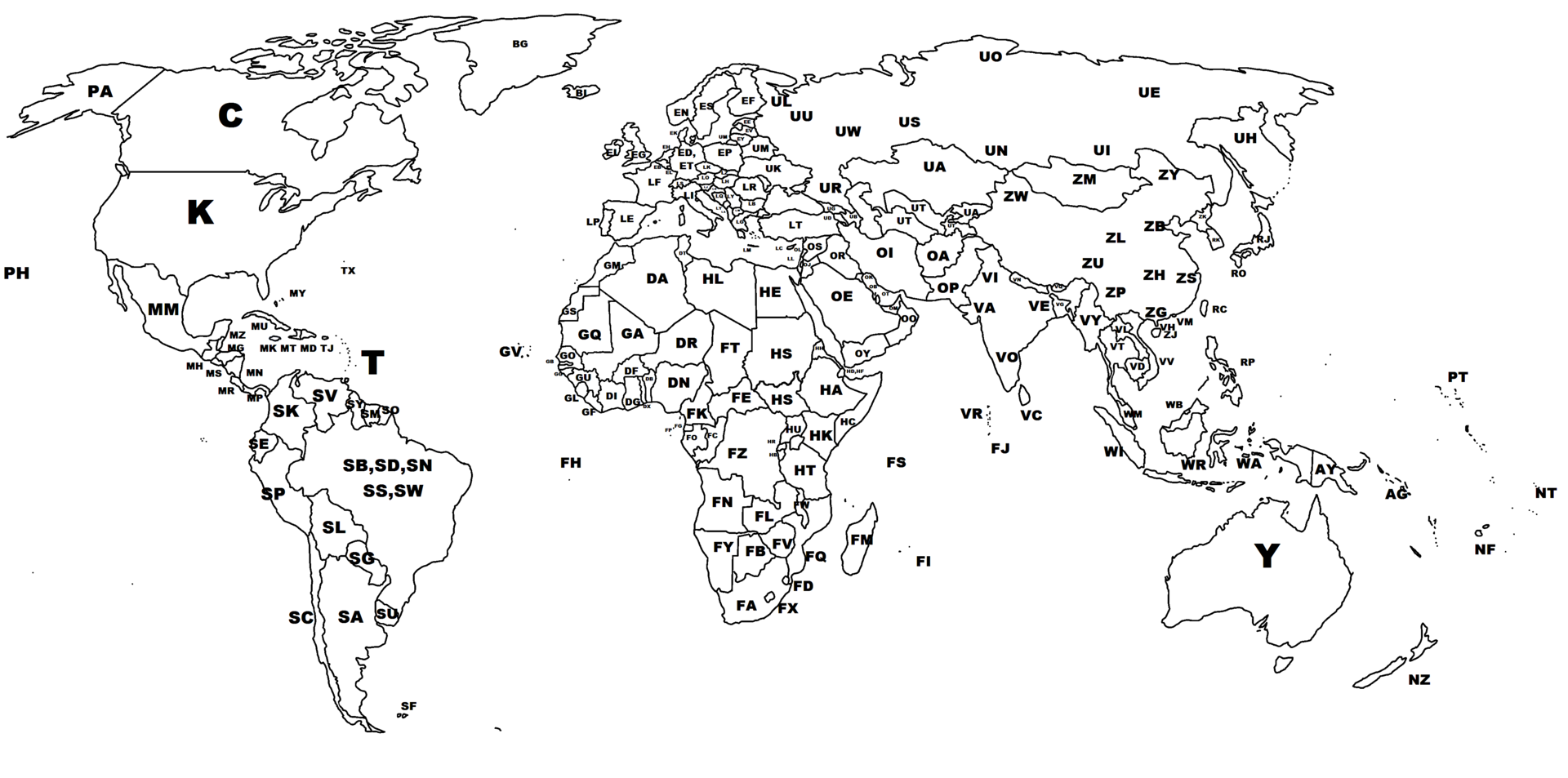
ICAO codes were established in 1959 to standardize global airport and airline identification, building on international aviation agreements and telecommunication call sign history.
Origins and Context
The International Civil Aviation Organization (ICAO) was created following the Chicago Convention of 1944, which aimed to standardize international air travel and promote cooperation among nations International Civil Aviation Organization (ICAO). This convention laid the groundwork for global aviation standards, including the need for a consistent system to identify airports and aviation facilities worldwide.
Adoption of ICAO Codes
The ICAO airport code system was officially adopted on 24 March 1959 and came into force on 1 October 1959. These codes are four-letter alphanumeric identifiers used primarily for air traffic control, flight planning, and other technical aviation operations, distinct from the three-letter IATA codes used for commercial purposes like ticketing and baggage handling.
Structure and Methodology
ICAO codes are regionally and nationally structured. The first one or two letters indicate the country or large region, while the remaining letters identify the specific airport. For example, EGLL represents London Heathrow, with EG denoting the United Kingdom. The assignment of these letters was influenced by historical telecommunication call sign prefixes established in the early 20th century, such as those from the 1912 London convention. Countries like the United States adopted K for continental airports, while Canada used C, reflecting their telegraph and radio call sign history.
Evolution and Regional Considerations
ICAO divided the world into 22 regions, each assigned a letter, with some letters reserved for special purposes or avoided due to potential confusion (e.g., I, J, Q, X). Over time, the system has evolved to accommodate new airports, political changes, and technological developments, but the regional and country-based structure remains central to the ICAO coding methodology.
Summary
The ICAO code system is a product of post-World War II international cooperation, telecommunication history, and the need for standardized global aviation operations. It ensures that every airport and aviation facility has a unique, globally recognized identifier, facilitating safe and efficient air traffic management worldwide.
bottom of page